 Helix
HelixWhy Quibi raised $1.75 billion and died in six months.
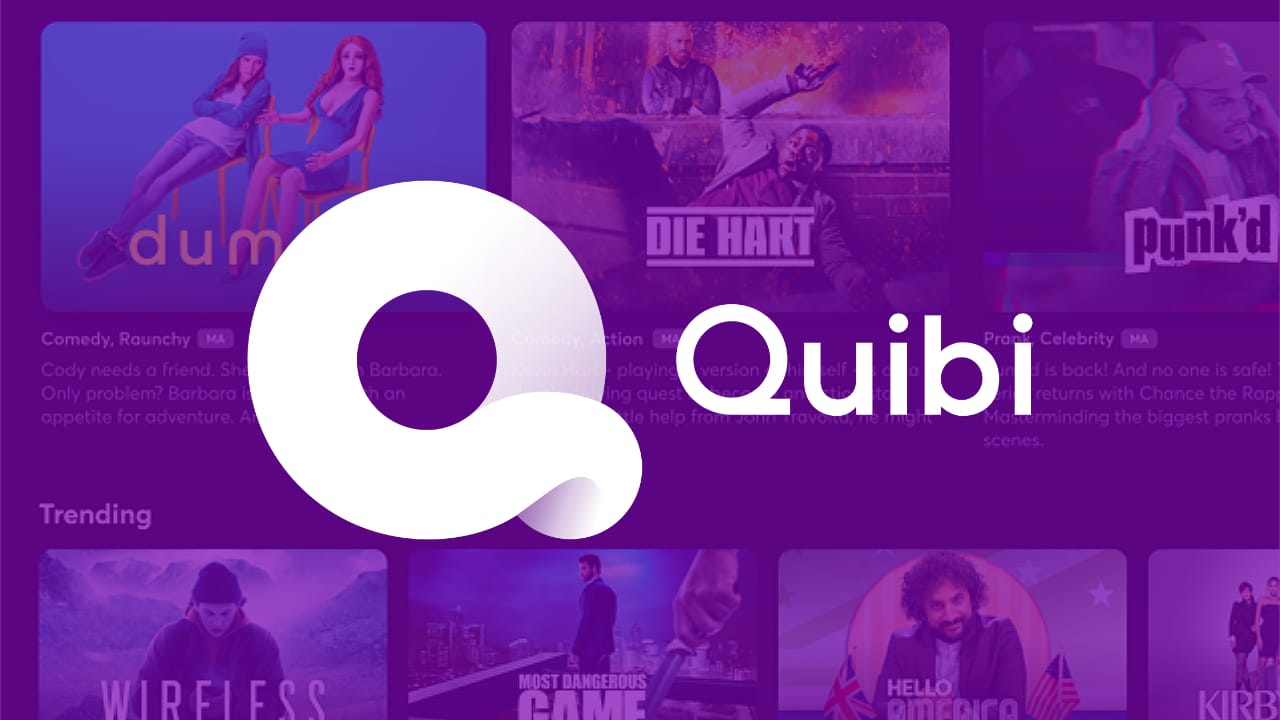
In August 2018, a company called NewTV started raising money. By the time it launched as Quibi in April 2020, it had taken in 1.75 billion dollars. Disney was on the cap table. So were NBCUniversal, WarnerMedia, Sony, Alibaba, and Goldman Sachs. The founder was Jeffrey Katzenberg, who built DreamWorks Animation. The CEO was Meg Whitman, who had run eBay and then Hewlett-Packard.
Six months later, it was over. The shutdown was announced on October 21, 2020. By December 1, the service was dark. A month after that, the entire library of shows was sold to Roku for less than 100 million dollars. It is one of the most expensive failures in startup history. Roughly 1.4 billion dollars gone, at a burn rate near 200 million a month.
Everything you could see actually worked
Quibi shipped. The app was real and well-built. The "Turnstyle" feature lets a show rotate cleanly between portrait and landscape as you turn your phone. The catalog was enormous: more than a billion dollars spent on 175 shows and 8,500 episodes, with real stars attached. There was a Super Bowl ad that cost 5.6 million dollars. There was reportedly six million paid to Reese Witherspoon to narrate a nature program.
So the engineering was not the problem. The content was not the problem. The launch happened on time. By every measure a Hollywood team would recognize, Quibi executed almost flawlessly.
The excuse that feels true
When it collapsed, Katzenberg explained by saying:
"I attribute everything that has gone wrong to coronavirus."
It is a comfortable story. Quibi was designed for people on the move, watching premium "quick bites" during a commute or a coffee line or a lunch break. Then the world locked down, the commutes disappeared, and the whole use case evaporated. Bad luck, bad timing.
However, there is more to it than just the "bad luck" of coronavirus. The spare minute Quibi wanted was never empty. TikTok and YouTube already owned it, for free, with content people actively wanted to share. Quibi was asking 5 to 8 dollars a month to compete for attention that its rivals were giving away for free. On top of that, the app blocked screenshots and clip sharing at launch, which switched off the exact word-of-mouth engine that makes mobile video spread. And it stayed mobile-only for months while everyone sat at home next to a television. The TV app arrived one day before the company announced it was shutting down.
None of that is a pandemic. Each one is a decision, made before launch, about how people behave. The virus did not cause those decisions. It just removed the cover story that might have hidden them for a while longer.
The one thing nobody tested
Underneath all of it sat a single assumption that they never truly validated: the assumption that people wanted to pay for short, premium, made-for-mobile videos.
Quibi launched with no meaningful beta, no public test, and no real user research on that core bet. The founders trusted their instincts, and their instincts were world-class at making television. The result at shutdown was about 500,000 paying subscribers against projections many times that size, with most free trials never converting.
That number was knowable before a billion dollars went into 8,500 episodes. A small test would have surfaced it. The team had the talent and the money to run one. They did not run it because nothing forced the question to the surface while the conviction was high and the funding was flowing.
Why the money made it worse
It is tempting to think that more resources buy more certainty. Quibi is the opposite lesson. As one case study put it, the 1.75 billion dollars bought conviction, not truth.
The pedigree was the trap. A legendary founder and a famous CEO raised a billion dollars before testing a single assumption, and that very credibility let them skip the step that would have caught the mistake. When everyone in the room already believes, and the bank account confirms it, the boring question (will anyone actually want this?) feels beneath the project. So it never gets asked out loud.
The danger was never a lack of skill. It was skill so unquestioned that nobody noticed the assumptions on which everything depended.
This is not really a Hollywood story
It is easy to file Quibi under billionaires behaving strangely and move on. That misses the point, because the same failure is now happening at a thousand times the volume, with none of the budget.
Building software used to take months. Now it takes a weekend. Anyone can describe an app to a coding agent and watch it appear. The hard part is no longer the coding. It is deciding WHAT to code, and asking the questions that decide whether the thing is worth building at all. Who is going to use this? What are the risks? How real is the market? Are people actually willing to pay for it?
Quibi did not skip that work. Katzenberg and Whitman are among the most experienced operators alive, and they had answers for every one of those questions. The failure was not that they did not think. The problem was that they committed almost everything before a single real customer signal came back: over a billion dollars of finished shows, locked-in talent, a complete app, and a Super Bowl ad.
By the time the market answered, there was nothing cheap left to learn from and no room left to move. The TV app arrived one day before they announced the shutdown. Overconfidence is what made that feel reasonable. It is what lets a team go all in before launch and lose the instinct to hedge, or to test the riskiest assumption, while testing it is still cheap.
That is the part that builders and solo founders share with the billion-dollar studio. Founders must answer all the crucial questions before even beginning. The concept itself isn't enough. The concept must be put through phases and trials. It must be put to research, compared against competitors, and be put in a complete model to make sure that the product stands as a whole (including thinking about how the users will work with it, and how they will pay for it, etc.). This is crucial.
After that, founders must also confirm all this theory by putting it to a real-life practical test. This can be done by telling a friend, or posting on a subreddit, or using some other method that gets founders in touch with real consumers. This MUST be done before you put serious time, effort, and money into projects.
More importantly, one can't be emotional here. This process must be completely objective and based on feedback. Oftentimes, founders can be too attached to the idea they had in their head, even if it's not validated properly, and this leads to them committing and eventually failing.
The step that was missing
This is the gap we built Helix for.
Helix is a live Business Blueprint for the thing you are about to build. You describe your idea, and instead of cheering it on, it hands the hard questions back to you and makes you answer them in the open. The assumptions stop living in your head and your scattered notes. They sit on a canvas where you can finally see them, and argue with the one you are quietly betting everything on.
It does not pretend to know whether your idea will work. Nothing can tell you that from a desk. What it does is make sure you know which assumptions you are leaning on, and which of them would hurt the most if you turned out to be wrong, so you can go test those for the price of a conversation instead of the price of a company.
And the Blueprint stays alive. As the product changes, it changes with it, and it feeds straight into your coding agent, so Cursor or Claude Code already knows your users and your constraints before you type a single prompt. The thinking finally lives somewhere, and the build sits on top of it.
Quibi had the talent, the money, and the names. What it never had was something that forced the decisive question into the open while the answer was still cheap. That is the whole game. The question costs almost nothing to ask, and everything to ignore.
ChatGPT will tell you your idea is brilliant. Helix gives you a Business Blueprint, so you can find out the truth while you can still do something with it.